


A story of “Symmetry and Illusion.” The four minarets lean slightly outward so that if they were to fall, they would fall away from the tomb. Also, as you walk toward the gate, the Taj appears to get smaller, a play on human perception.

The “Garden of Paradise.” This was the first time the Charbagh (four-fold garden) was used on this scale in India. It tells the story of a wife’s devotion—it was built by Empress Bega Begum for her late husband.

The “Whispering Gallery.” The dome is the second largest in the world. The story is “Physical Perfection”—a sound made at one end is echoed eleven times, and a whisper can be heard clearly 40 meters away across the dome.

The “Son’s Tribute.” Often called the “Poor Man’s Taj,” it was built by Prince Azam Shah. Its story is one of late-Mughal economy; only the main dome is marble, while the rest is clever, polished plaster.

A “Pyramidal Mystery.” Unlike other Mughal tombs, it has no dome. It is a story of “Philosophical Synthesis”—the design incorporates elements of Hindu, Christian, Islamic, and Buddhist architecture.
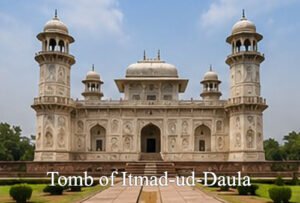
The “Jewel Box.” This was the first Mughal building to use Pietra Dura (stone inlay) on a massive scale. It was built by Empress Nur Jahan for her father, marking the rise of female influence in Mughal design.

The “Floating Tomb.” Built in the middle of a man-made lake, it is a story of “Pathan Majesty”—its massive red sandstone dome is actually 13 feet wider than that of the Taj Mahal.

The “Inscribed Tomb.” Every inch of the exterior is covered in delicate stone calligraphy. The story goes that its beauty was so legendary it directly inspired the architects of the Taj Mahal.

The “Last Glow.” Built when the Mughal empire was fading, its story is “Architectural Resourcefulness”—many of the stones were stripped from other older tombs to finish this final grand monument.

The “Labyrinth.” Known as Bhulbhulaiya, the story is in its thick walls, which contain a hidden maze of corridors designed to confuse anyone trying to reach the upper gallery.
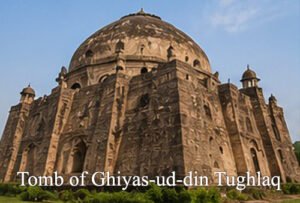
The “Fortress Tomb.” It has sloping walls (batter) and is connected to Tughlaqabad Fort by a causeway. It tells the story of a King who lived and died as a warrior, even in his final resting place.

The “Lace of Stone.” These tombs feature Jali (lattice) work so fine it looks like fabric. They tell the story of the Paigah nobles, who were so close to the Nizams they were “the shadows of the throne.”

The “Porcelain Tomb.” It was the first in India to be covered in glazed tiles (Kashi-kari). The story is of “Persian Influence”—the architect was a poet and prime minister who wanted his tomb to reflect the colors of his homeland.

India’s first marble tomb. The story is “Inspiration”—Shah Jahan sent his architects here to study the marble work before they began building the Taj Mahal.

The “Cave Tomb.” Built by Iltutmish for his son, the story is “Subterranean Peace”—the grave is in an underground octagonal chamber, a unique design intended to keep the burial site cool and quiet.